LuxeRoster

LuxeRoster SaaS Platform

Complete SaaS rostering platform tailored for retail operations with smart scheduling and leave management

Year

2024

Role

Lead Developer & UX Architect

Duration

16 weeks

Read Time

7 min read

strategydesignengineering
LuxeRoster SaaS Platform - LuxeRoster

LuxeRoster: Revolutionizing Retail Workforce Management

A comprehensive SaaS rostering and leave management platform designed specifically for the retail industry, addressing the unique challenges of seasonal shifts, staff availability, and compliance requirements that generic scheduling apps fail to handle.

Project Overview

LuxeRoster transforms how retail businesses manage their workforce by providing an intelligent scheduling platform that understands the nuances of retail operations. Unlike generic scheduling tools, LuxeRoster is purpose-built for retail environments where coverage, compliance, and customer service levels are critical.

The Retail Scheduling Challenge

Retail workforce management presents unique challenges:

  • Seasonal Variations: Peak periods requiring rapid scaling
  • Coverage Requirements: Ensuring appropriate staffing across departments
  • Staff Availability: Managing part-time and casual workers with varying availability
  • Compliance: Meeting award requirements and break scheduling
  • Last-minute Changes: Handling sick leave and urgent coverage needs
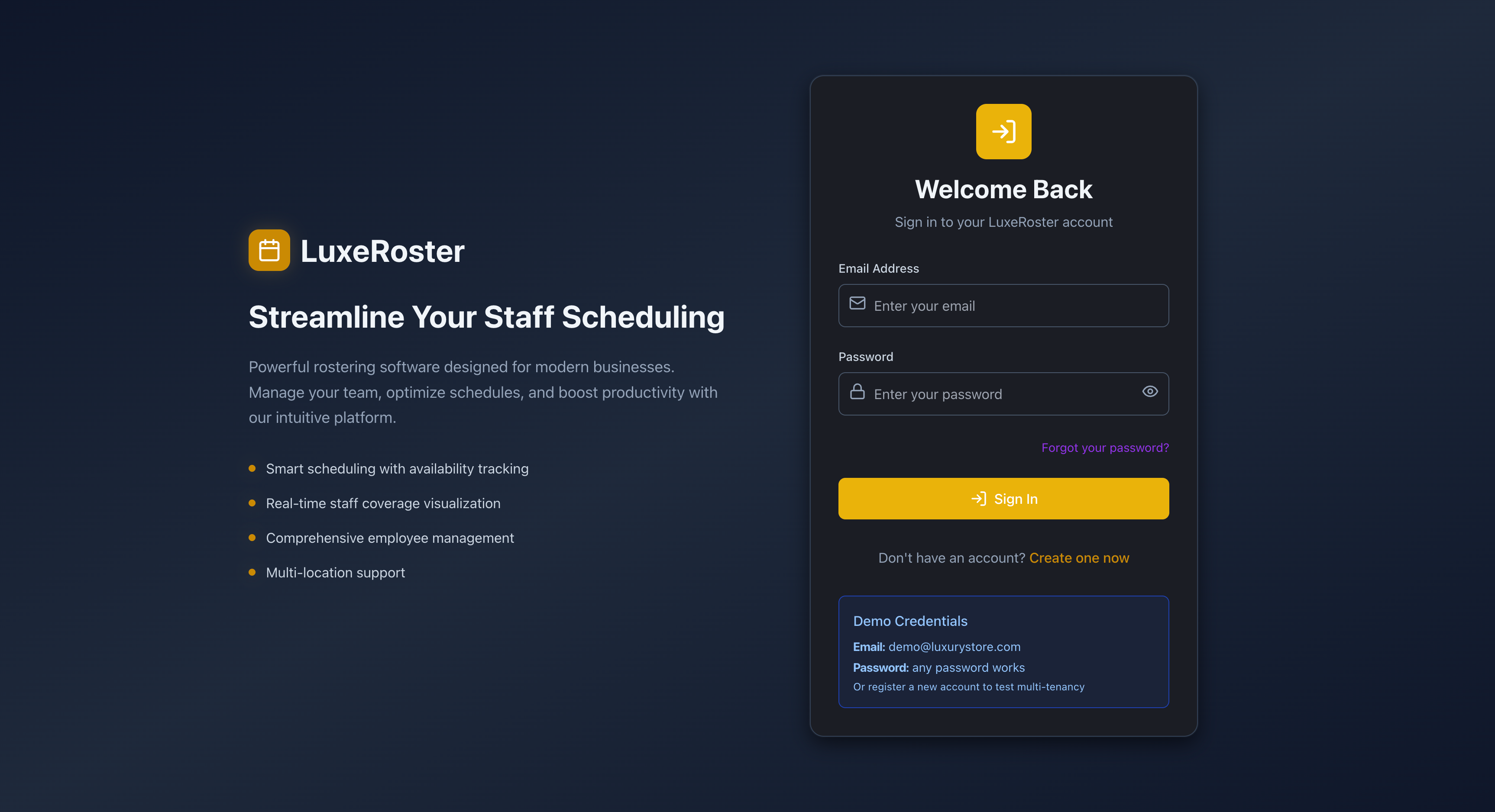
LuxeRoster login screen

Technical Architecture

Core Rostering Engine

Built a sophisticated scheduling engine in TypeScript that handles complex retail constraints:

interface ShiftRequirement {
  department: string
  timeSlot: TimeSlot
  minStaff: number
  maxStaff: number
  requiredSkills: Skill[]
  seniorityMix: SeniorityRequirement
}

class ConflictResolver {
  resolveSchedulingConflicts(
    requirements: ShiftRequirement[],
    staffAvailability: StaffAvailability[],
    constraints: SchedulingConstraint[]
  ): OptimizedSchedule {
    // Smart conflict resolution algorithm
    return this.optimizeForCoverageAndFairness(requirements, staffAvailability)
  }
}

Smart Conflict Resolution

The scheduling engine incorporates multiple factors:

  • Staff Availability: Personal schedules and preferences
  • Skill Matching: Ensuring qualified staff for specialized areas
  • Workload Distribution: Fair allocation of hours across team members
  • Compliance Checking: Automatic validation against employment awards
  • Coverage Optimization: Maintaining appropriate staffing levels

Key Features Implementation

1. Intelligent Scheduling

Auto-Scheduling Algorithm: Developed a constraint-based scheduling system that:

  • Analyzes historical data to predict optimal staffing
  • Considers individual staff preferences and availability
  • Ensures fair distribution of desirable and less popular shifts
  • Maintains compliance with employment regulations

Conflict Resolution: Real-time detection and resolution of scheduling conflicts:

  • Double-booking prevention
  • Overtime alerts and management
  • Break scheduling compliance
  • Skills gap identification

2. Leave Management Workflow

Streamlined Request Process:

interface LeaveRequest {
  employeeId: string
  dateRange: DateRange
  leaveType: LeaveType
  reason?: string
  coverageRequired: boolean
  urgency: Priority
}

class LeaveWorkflow {
  async processRequest(request: LeaveRequest): Promise<LeaveDecision> {
    const impactAnalysis = await this.analyzeSchedulingImpact(request)
    const coverageOptions = await this.findCoverageOptions(request)

    return this.makeRecommendation(impactAnalysis, coverageOptions)
  }
}

Intelligent Approval Process:

  • Impact analysis on existing schedules
  • Automatic coverage suggestions
  • Escalation workflows for complex requests
  • Integration with payroll systems

3. Shift Swapping & Transparency

Peer-to-Peer Shift Management:

  • Staff-initiated shift swaps with manager approval
  • Skill and availability matching for swap suggestions
  • Real-time roster updates and notifications
  • Mobile-first interface for on-the-go access

Roster Transparency:

  • Live roster visibility for all team members
  • Upcoming shift notifications and reminders
  • Schedule change alerts and confirmations
  • Team communication integration
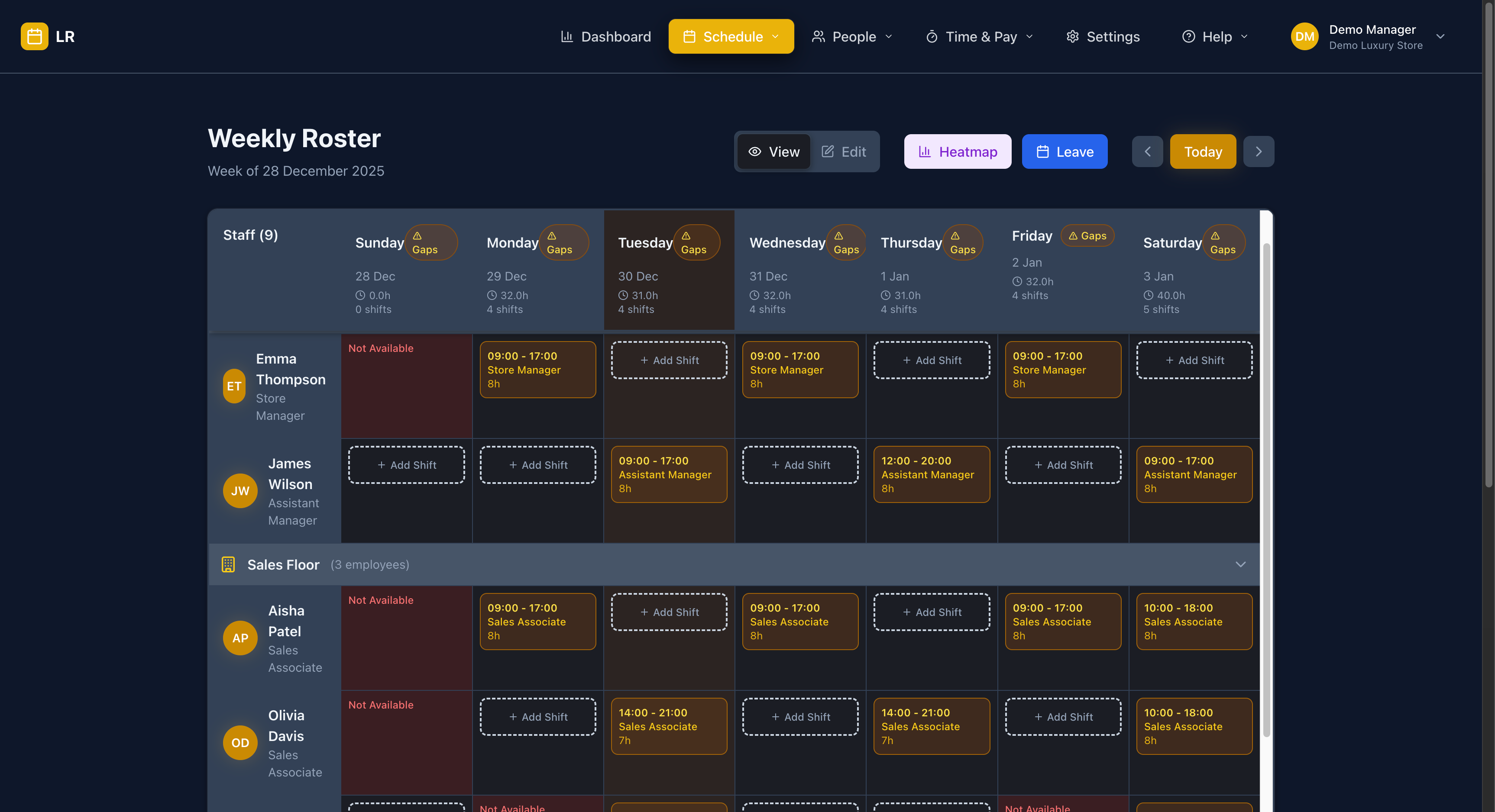
Weekly roster view

User Experience Design

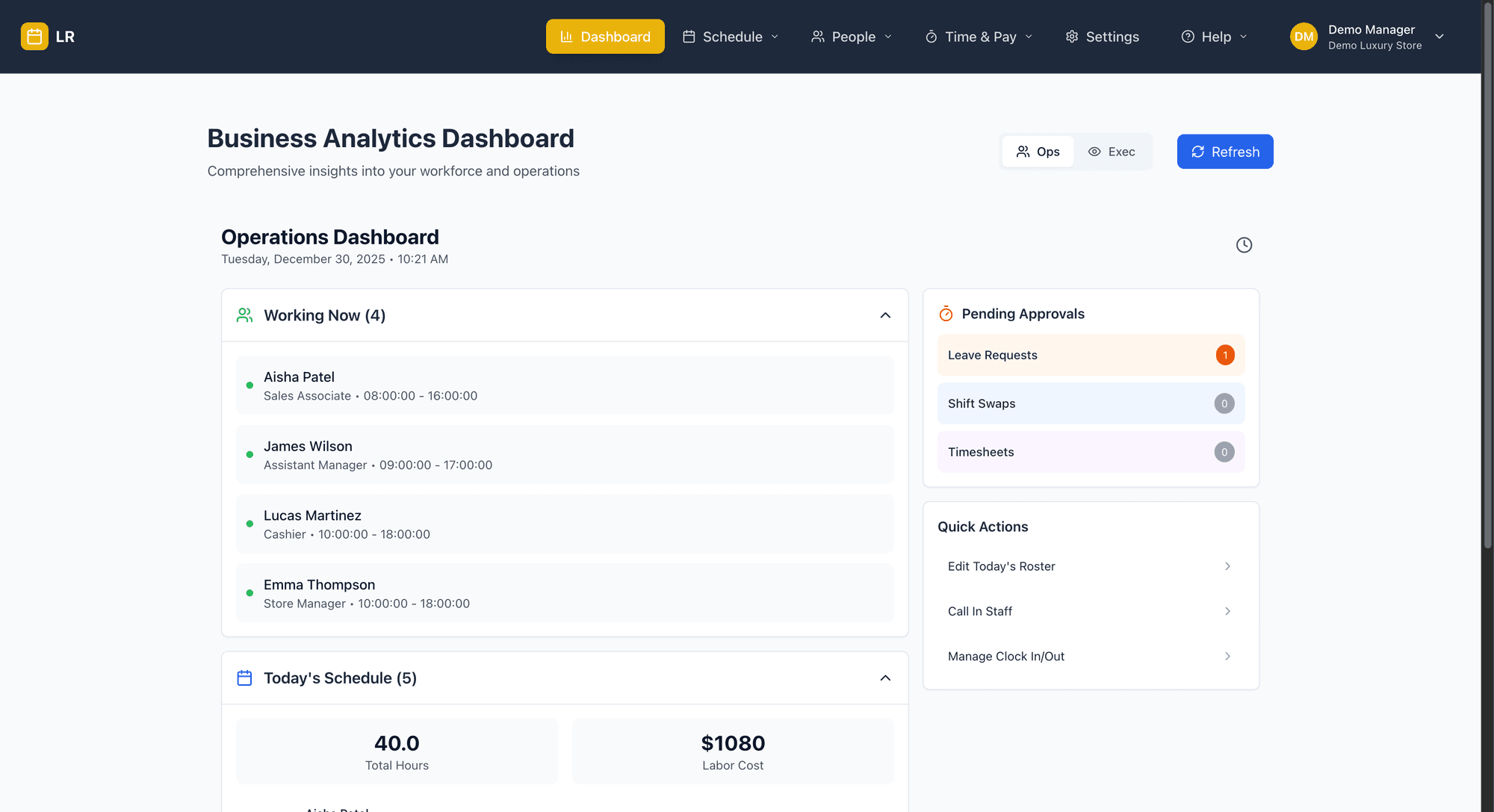
Manager Dashboard

Designed an intuitive interface that balances power with simplicity:

Key UX Principles:

  • Overview First: Dashboard provides immediate insights into staffing status
  • Drill-Down Detail: Easy navigation from overview to specific issues
  • Action-Oriented: Clear pathways for common tasks
  • Mobile Responsive: Full functionality across all devices

Core Manager Workflows:

  1. Weekly Planning: Drag-and-drop schedule creation
  2. Issue Resolution: One-click conflict resolution
  3. Performance Monitoring: Staff utilization and efficiency metrics
  4. Budget Management: Real-time labor cost tracking

Staff Interface

Focused on simplicity and accessibility for diverse retail workforce:

Design Considerations:

  • Minimal Cognitive Load: Essential information prominently displayed
  • Touch-Friendly: Large touch targets for mobile use
  • Clear Hierarchy: Important information stands out
  • Multilingual Support: Accommodating diverse retail teams

Technology Decisions

Frontend Architecture

TypeScript + React/Next.js:

  • Type safety for complex scheduling logic
  • Component-based architecture for maintainability
  • Server-side rendering for performance
  • Progressive web app capabilities for mobile experience

Backend Strategy

Current: Node.js/Express

// Rostering API endpoint
app.post('/api/rosters/generate', async (req, res) => {
  const { storeId, weekCommencing, requirements } = req.body

  const constraints = await getStoreConstraints(storeId)
  const availability = await getStaffAvailability(storeId, weekCommencing)

  const schedule = await rosteringEngine.generate({
    requirements,
    constraints,
    availability
  })

  res.json({ schedule, conflicts: schedule.conflicts })
})

Planned Migration: NestJS

  • Enhanced modularity and dependency injection
  • Better TypeScript integration
  • Improved testing capabilities
  • Microservices preparation

Database Design

PostgreSQL for robust data integrity:

  • Complex relational data modeling
  • ACID compliance for critical scheduling data
  • Advanced querying capabilities for analytics
  • Scalability for multi-store operations

Business Impact & Results

Operational Efficiency

For Store Managers:

  • 80% Time Reduction: From manual spreadsheet management to automated scheduling
  • Reduced Conflicts: Proactive conflict detection and resolution
  • Compliance Assurance: Automatic checking against employment awards
  • Better Coverage: Optimized staffing based on historical patterns

For Staff:

  • Increased Flexibility: Easy shift swapping and availability management
  • Better Work-Life Balance: Predictable scheduling with personal preferences
  • Reduced Administrative Burden: Self-service leave requests and roster updates
  • Mobile Access: Full functionality from personal devices

Business Metrics

Measurable Improvements:

  • 25% Reduction in scheduling-related administrative time
  • 30% Decrease in last-minute coverage issues
  • 40% Improvement in staff satisfaction with roster fairness
  • 15% Reduction in overtime costs through better planning

Marketing & Brand Development

Brand Identity Creation

Developed comprehensive brand identity for LuxeRoster:

Visual Identity:

  • Professional yet approachable logo design
  • Color scheme reflecting trust and efficiency
  • Typography system optimized for digital interfaces
  • Icon library for consistent UI elements

Marketing Collateral:

  • Facebook business page with targeted retail audience
  • Product demonstration videos and screenshots
  • Sales presentation materials
  • Website copy emphasizing retail-specific benefits

Go-to-Market Strategy

Target Audience Identification:

  • Small to medium retail businesses (5-50 employees)
  • Fashion boutiques and specialty stores
  • Franchise operations with multiple locations
  • Retailers struggling with manual scheduling processes

Value Proposition Messaging:

  • "Built for Retail, Not Adapted for Retail"
  • Focus on industry-specific pain points
  • ROI through reduced administrative overhead
  • Improved staff satisfaction and retention

Future Development Roadmap

Planned Analytics Integration

Workforce Analytics Dashboard:

  • Attendance tracking and trend analysis
  • Productivity metrics by department and individual
  • Efficiency optimization recommendations
  • Predictive staffing based on sales forecasts

Advanced Features

AI-Powered Enhancements:

  • Machine learning for demand prediction
  • Automated shift pattern optimization
  • Anomaly detection for unusual patterns
  • Intelligent coverage recommendations

Integration Ecosystem:

  • POS system integration for real-time sales data
  • Payroll system connectivity
  • Time clock and attendance tracking
  • Performance management tools

Technical Challenges & Solutions

Scalability Considerations

Multi-Tenant Architecture:

  • Store-specific data isolation
  • Configurable business rules per tenant
  • Scalable database design for growth
  • Performance optimization for concurrent users

Real-Time Updates:

  • WebSocket implementation for live roster updates
  • Optimistic UI updates for better user experience
  • Conflict resolution for simultaneous edits
  • Mobile push notifications for schedule changes

Data Security & Privacy

Compliance Framework:

  • GDPR compliance for employee data protection
  • Role-based access control
  • Audit logging for all schedule changes
  • Secure API authentication and authorization

Lessons Learned

Technical Insights

TypeScript Benefits: Strong typing proved invaluable for complex scheduling logic, catching potential errors early and improving code maintainability.

UX for Diverse Users: Designing for both tech-savvy managers and diverse retail staff required careful attention to accessibility and progressive disclosure of complexity.

Domain Knowledge: Deep understanding of retail operations was crucial for building features that actually solve real problems rather than generic scheduling needs.

Business Learnings

Market Validation: Regular feedback from retail managers confirmed the importance of industry-specific features over generic scheduling tools.

Iterative Development: Starting with core scheduling and gradually adding features allowed for better user feedback and product-market fit.

Brand Positioning: Emphasizing retail expertise rather than general scheduling capabilities resonated strongly with target customers.

Conclusion

LuxeRoster demonstrates the power of industry-specific SaaS solutions. By understanding the unique challenges of retail workforce management and building purpose-designed tools, the platform delivers significantly more value than generic alternatives.

The combination of sophisticated scheduling algorithms, intuitive user experience, and retail-focused features creates a compelling solution that addresses real business needs while providing measurable ROI.

The project showcases end-to-end product development capabilities, from technical architecture and implementation to UX design, brand development, and go-to-market strategy.

TypeScriptReactNext.jsNode.jsExpressPostgreSQLNestJSWebSockets

View the Platform

LuxeRoster continues to evolve with ongoing feature development and expanding retail partnerships, demonstrating the sustainable value of purpose-built industry solutions.

Interested in similar results?

Let's discuss how I can help bring your project to life with the same attention to detail.